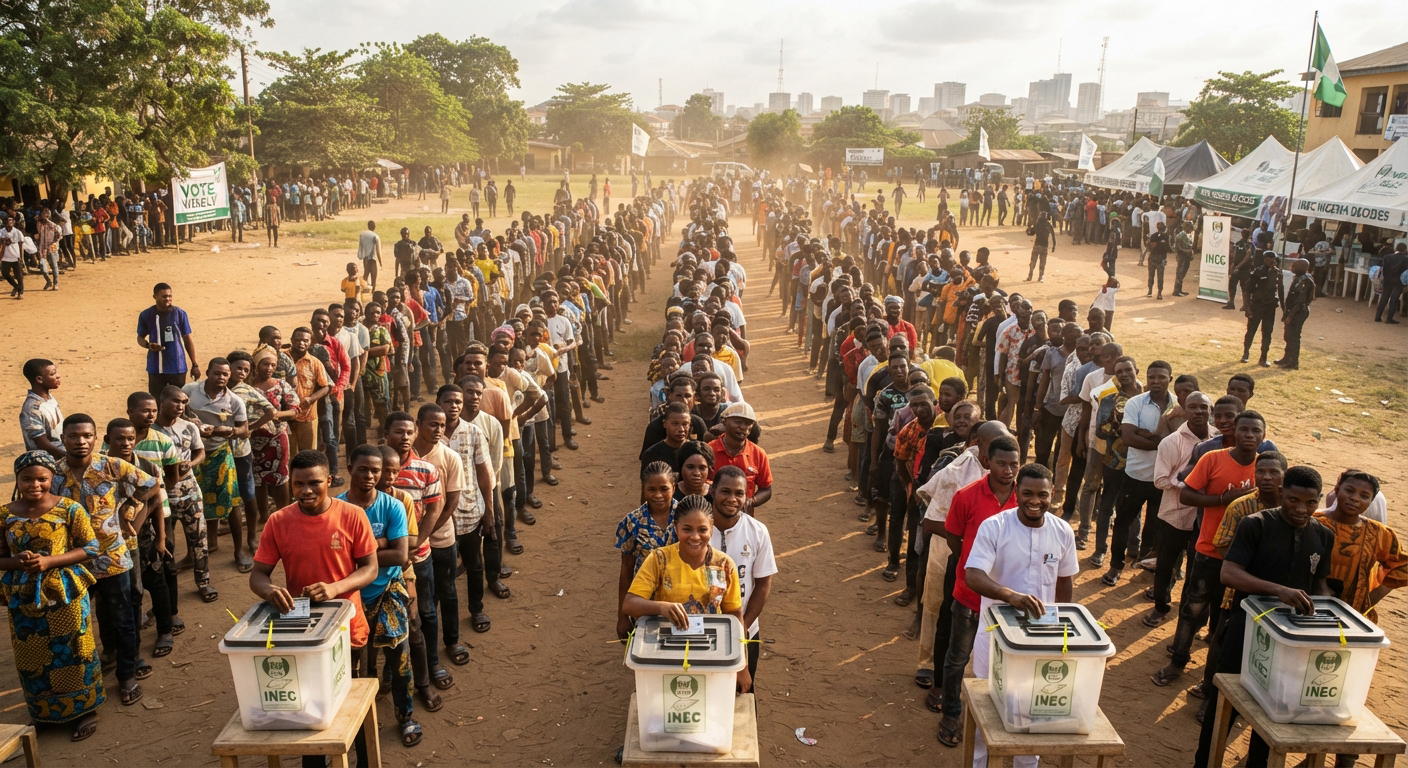
Nigerian youths, who make up more than 142 million of the country's population, are at the centre of a growing debate over whether their numbers can reshape the 2027 general elections. The Independent National Electoral Commission (INEC) disclosed that over 9.32 million young Nigerians registered during the 2026 Continuous Voter Registration exercise, according to Vanguard News. That figure has raised expectations about the influence of young voters, even as questions persist about whether they can convert their strength into decisive electoral outcomes.
Vanguard News reports that while some stakeholders see a generation that is increasingly politically aware and determined to demand accountability, others warn that apathy, declining confidence in the electoral process, political manipulation and weak grassroots structures could undercut youth participation. The debate has therefore moved past whether young Nigerians are ready to vote, and on to whether they are organised, motivated and confident enough in the system to shape results and hold leaders to account.
Why it matters
Youth participation could be decisive in 2027 given the sheer size of the demographic. But registration is not the same as voting, and the gap between the two is where the argument now sits. Stakeholders who spoke to Vanguard News offered sharply different readings of the same numbers, reflecting both the opportunities and the frustrations facing young Nigerians.
Jerry Tobi Olanrewaju, founder and team lead of Jet Farms and Agro Solutions Limited in Abuja, said many young Nigerians, particularly young farmers, have begun to lose hope in exercising their franchise. He said the farmers he works with cannot feel the impact of the government's Renewed Hope Agenda, and that while some macroeconomic indicators may point to progress, conditions on farms tell a different story. He cited rising input costs, high transportation costs, limited access to affordable financing and unstable markets as factors making farming harder. Many young people who once saw agriculture as an opportunity are now hesitant to farm because they are unsure about their survival and returns, he said.
Olanrewaju advised that young Nigerians must go beyond social media conversations and become deliberate about shaping the elections, with their participation driven by issues, accountability, credible leadership and policies that address their everyday realities.
Confidence gap versus political awareness
Abareowei Benaembele Donald, a youth leader in Bayelsa State and chief executive of Gologolo Global Views Enterprise, told Vanguard News that young Nigerians are now more politically aware and enlightened, and are ready to change the narrative. He argued that what they lack is not awareness, ambition or courage, but confidence in a political system that has repeatedly asked for their votes without rewarding their trust. He said hope must translate into jobs, affordable living, quality education, security and opportunities, rather than remaining a campaign slogan.
Donald warned that the 2027 election must not become another season of political exploitation in which youths are mobilised as campaign foot soldiers, hired to fill rallies and used to spread propaganda, only to be abandoned when decisions are made. He said young Nigerians must demand a place at the decision-making table rather than merely a place in the crowd.
He also stressed that numbers alone are insufficient. Organisation, direction and accountability are needed, he said, urging young Nigerians to convert their energy into voter education, issue-based engagement, credible candidacies, peaceful mobilisation and sustained demands for accountability. Political leaders, he added, should not mistake the patience of young Nigerians for apathy or permanent loyalty.
Toluwa Odekhe, an Abuja-based legal and public affairs analyst, offered a more measured assessment. He said Nigerian youths are ready to be counted in 2027 but have not yet shown they can be decisive. They hold the registration numbers and, on paper, a stronger legal framework, he said, but turnout, trust in the electoral umpire and the ability to field and protect candidates remain unproven. Odekhe said his analysis reads the youth question through the Electoral Act 2026, INEC's registration data and evidence on public confidence. Registration, he noted, is not voting.
The discussion comes as INEC steps up efforts to engage young voters. According to separate reports carried alongside the Vanguard News analysis, the commission has been mobilising Nigerian youths through campus debates aimed at shaping the future of democracy. The University of Jos won one such INEC campus debate and received a N3.5 million prize, according to FRCN HQ. Tribune Online also reported that the youth share of the voter register has dropped to 29.79 per cent as the 2023 cohort ages out, a development attributed to INEC's chairman. The Sun Nigeria reported that INEC has given reasons for the decline in youth voter registration ahead of the polls.
Taken together, the figures point to a demographic with enormous potential weight and an electoral system still working to earn its trust. The 9.32 million young registrants from the 2026 exercise represent a substantial pool, but the share of youths on the register has slipped, and the analysts and stakeholders quoted by Vanguard News disagree on whether enthusiasm will translate into turnout.
What happens next will depend on whether youth groups can move from online discussion to organised, issue-driven participation, and whether INEC's engagement efforts and the legal framework under the Electoral Act 2026 can rebuild confidence before 2027.